






How is soldering done?
An illustrated guide to understand, step by step, one of the oldest gestures in goldsmithing.
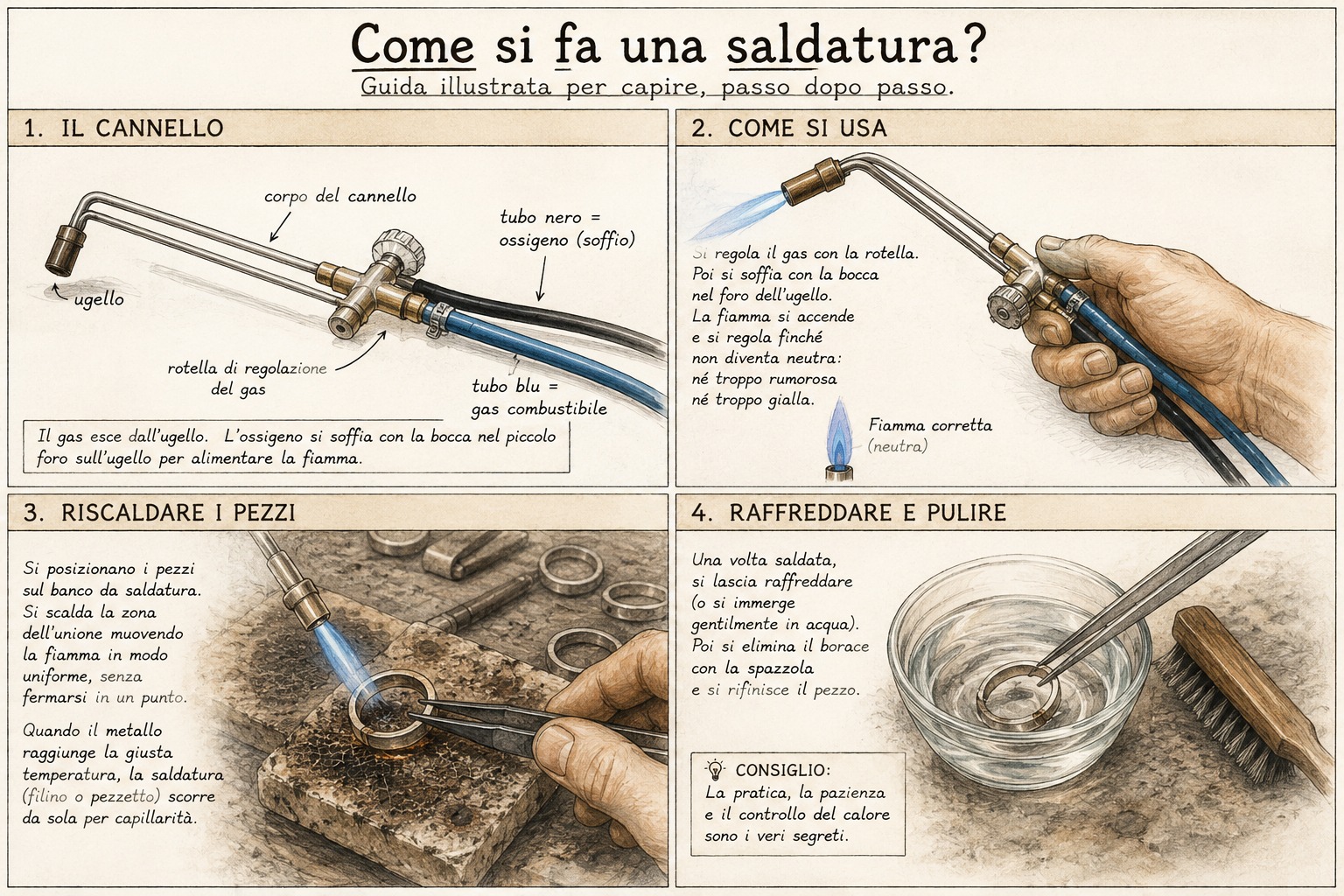
There are many ways to solder metals, and every craftsperson develops personal preferences, tools and working habits over time.
In the workshop we often use a traditional tool called achalumeau: a small jeweller’s torch that allows very precise control of heat.
The fascinating part is that flame control is almost immediate. After years of practice, the movement becomes natural, almost instinctive.
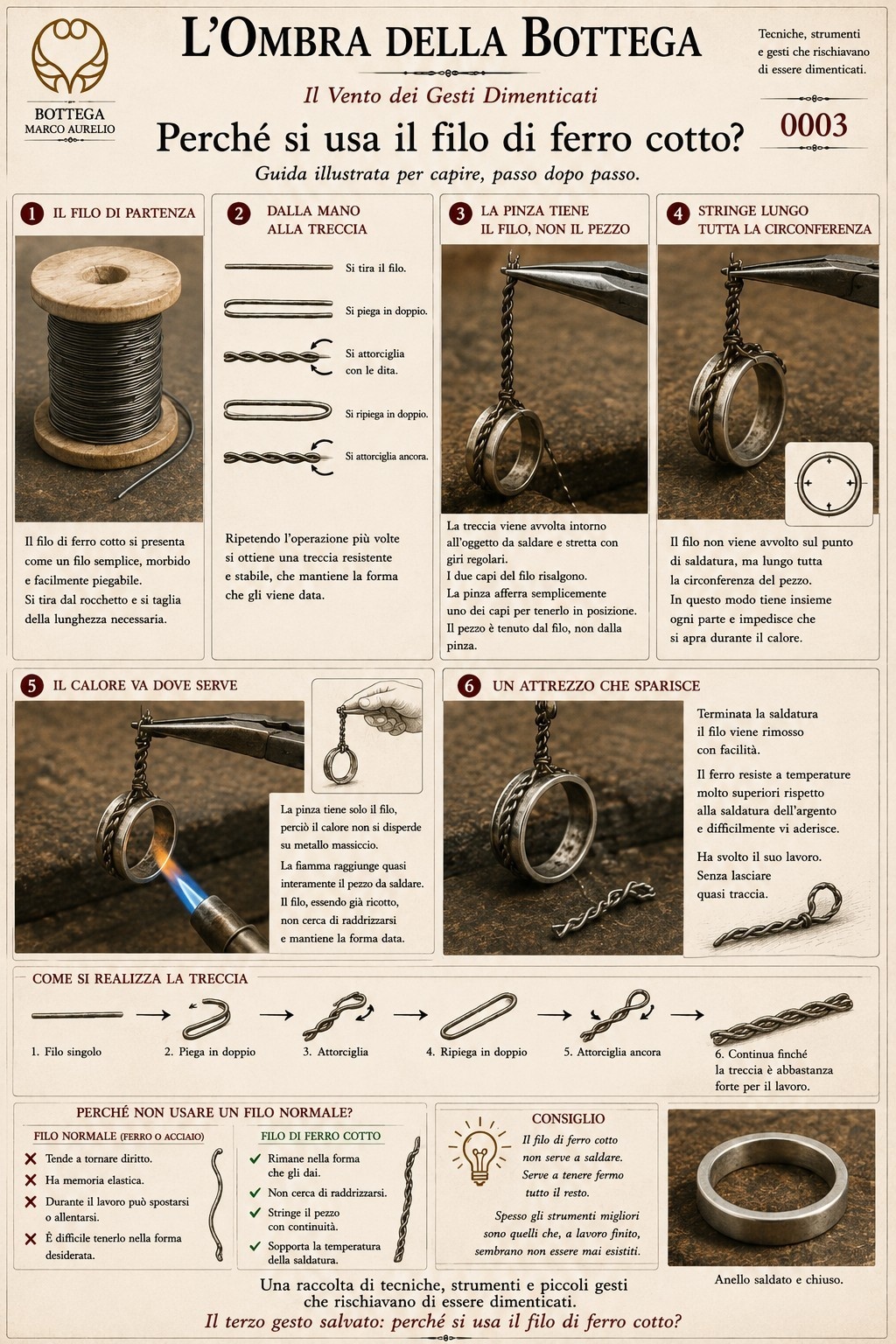
Contrary to what one might imagine, soldering does not always mean pointing the flame directly at the exact joint. In most cases the whole piece is heated in a controlled and even way, allowing the heat to reach the joint.
When the temperature is right, the solder melts and flows into the desired point by capillary action.
The final result depends on many factors: temperature, clean surfaces, the choice of soldering alloy and, above all, the experience of the craftsperson.
It is one of those jobs that look simple when done well, but take years of practice to truly master.
Workshop note
There are many types of torch, and almost every goldsmith has a favourite one.
Shapes, controls and construction details may change, but the principle remains the same: controlling heat with precision.
The flame shown in the illustration is only one example. Each job may require a different adjustment.